Getting great sound on your interviews isn’t easy in a pandemic, especially if your interviewee is on Zoom. In this video, Guy explains how you can record good audio on a Zoom call – by using a smartphone!
You can also check out this blog post for tips on how to record great sound and still say Covid-safe.
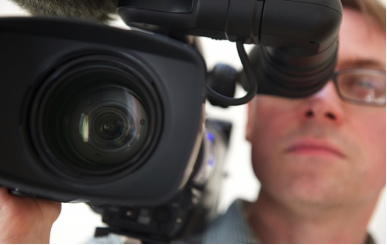
When I first started making news items, as a video journalist working for the government, I used a camera with a big lens like this one, says Phil Hayes.
It was intimidating. Suddenly, perfectly approachable people, who’d been chatting to me about “doing their best to find out what’s happened” started “ascertaining the full spectrum of data pertaining to the project parameters.” Come again?
The crew and all that gear made them nervous. They became a fake, overly self-important version of themselves. They shouldn’t – straightforward, clear speech always works better. We believe people when they act and sound like people.
As a smartphone film maker, you have a big advantage.
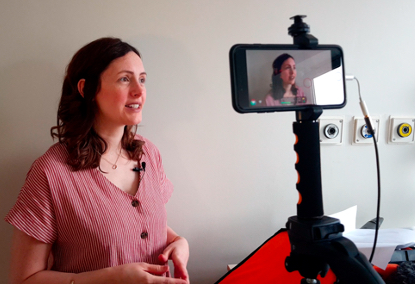
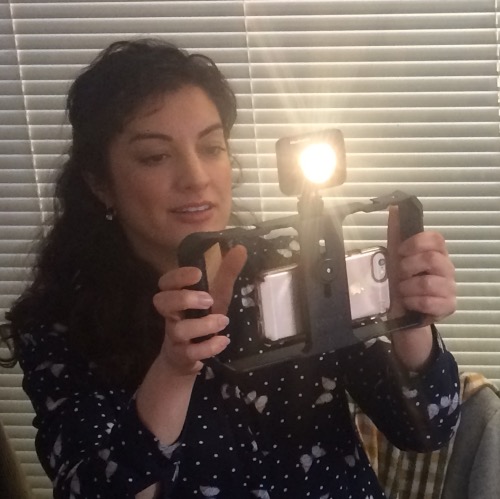
Your camera is a lot less intimidating. It’s a smaller lens on the kind of device that your interviewee has in their own pocket. And it’s just you operating it, no big film crew, so your interviewee feels at ease.
We spent a day filming with smartphones at Liverpool Women’s Hospital. When it was over, we asked Dr Natalie Mobbs how she felt being interviewed on smartphone. Here’s what she said.
You can also help to make interviewees even more comfortable by chatting to them before the interview about the areas you’re going to cover. Reassure them that you’re only asking them to talk about something they already know.
Also encourage them to look at you, not the camera – it’s much easier to speak naturally when you’re talking to a person. The camera’s a disinterested observer and they don’t need to look at it.
Finally, during the interview, nod to show them that what they’re saying is working for you and that you’re hearing it clearly. Don’t verbalise – any “huh-huhs” on the soundtrack will be a pain in the edit – but nodding is silent and really works.
So, get out there and film people with your smartphone. You’re contributing to a new wave of interviews that allow people to be more natural and to be themselves – themselves on a good day!
Being interviewed for video can be a daunting prospect, especially if the crew turn up with a large intimidating camera and loads of extra gear. That’s where a smartphone filmmaker has a big advantage.
People are used to smartphones – they probably own one themselves – so they’re much less likely to be intimidated when you interview them. Even so, we sometimes need to help put people at ease, so here’s a quick checklist on how to do just that.
Sit your interviewee down and get them comfortable by talking about where the final video will appear and whether you’re going to offer them the chance to review the edit before it’s released.
If they’re from outside your organisation, you’ll need to get them to sign a release form, so this is a good time to discuss this and get a signature.
Test that the microphone is working by asking them a simple question like “What did you have for breakfast?” You can record and play this back to check that your gear is working and that the microphone is properly plugged in.
During the interview, encourage them to look at you – it’s much easier to talk to a human being than a glass cyclops.
Nod to keep them talking and to show them that what you’re hearing is good, but don’t make any sound yourself – that’ll cause problems in the edit.
At the end, before you let them go, check that the interview (including audio) has been recorded by playing it back through headphones. It’s better than having to call them back and do it all over again – especially if you’re interviewing the boss!